BURNS NIGHT: When Poetry Meets Scotch Whisky

BURNS NIGHT: When Poetry Meets Scotch Whisky
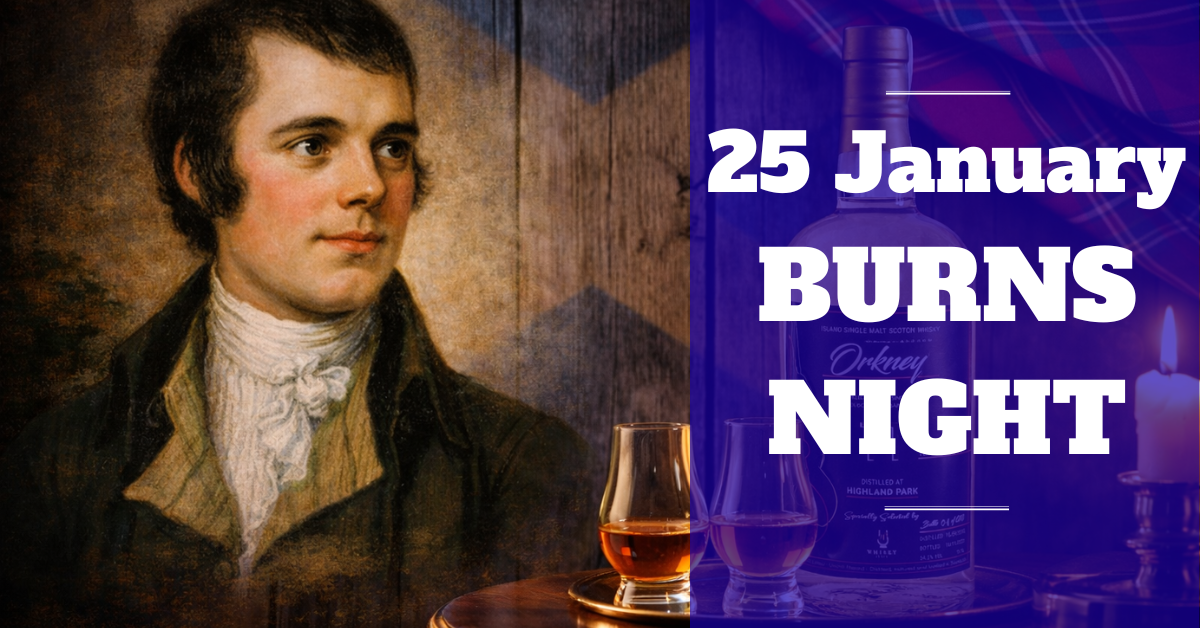
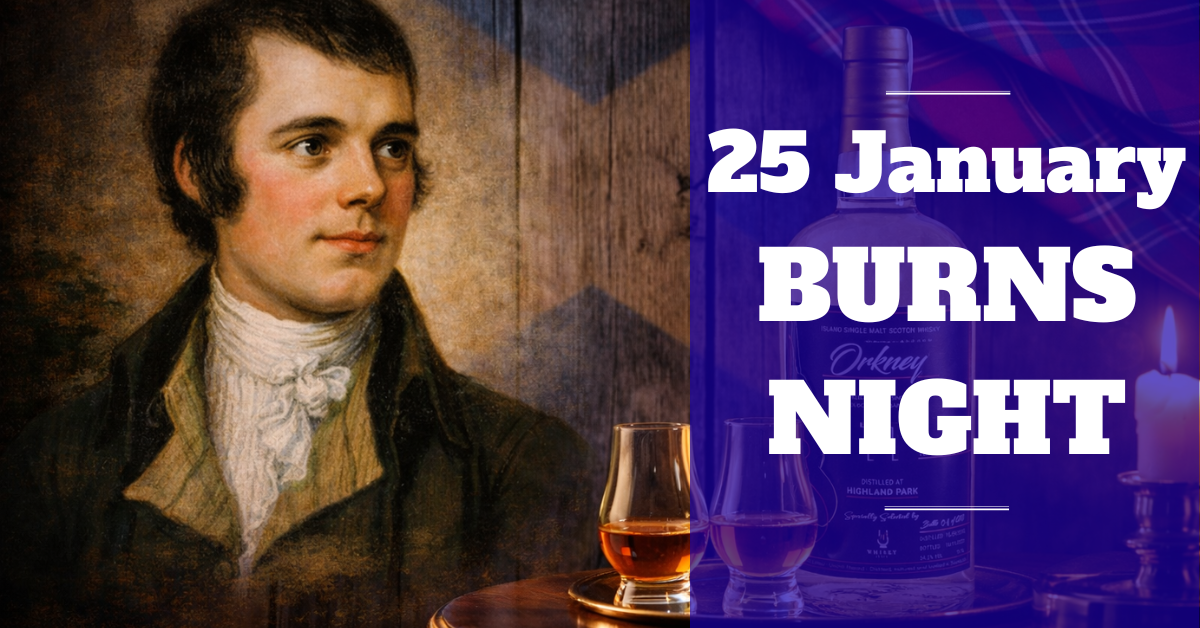
The Burns Night, celebrated every 25 January, is far more than a simple literary anniversary. On this occasion, it is not only the Scots who celebrate: whisky lovers and enthusiasts of Scottish culture all over the world symbolically join the festivities, recognising in Robert Burns the man who, like few others, was able to embody and define what it truly means to be Scottish. The national poet of Scotland, Burns is honoured through an evening that brings together immortal verses, codified rituals and, above all, Scotch whisky, the undisputed star of the toasts and a symbol of conviviality and shared identity.
What is Burns Night?
The Burns Night originated at the end of the 18th century as a private commemoration of the life and works of Robert Burns. Its origins date back to July 1801, when nine friends of the poet gathered to celebrate the fifth anniversary of his death in his hometown of Alloway, inside Burns Cottage.
That convivial evening was such a success that the organisers decided to repeat it the following year, introducing a change that would mark the history of the celebration: no longer a summer gathering, but a dinner held to mark the anniversary of Burns’s birth, on 25 January. From that moment on, a tradition took shape that is still celebrated today in Scotland and around the world.
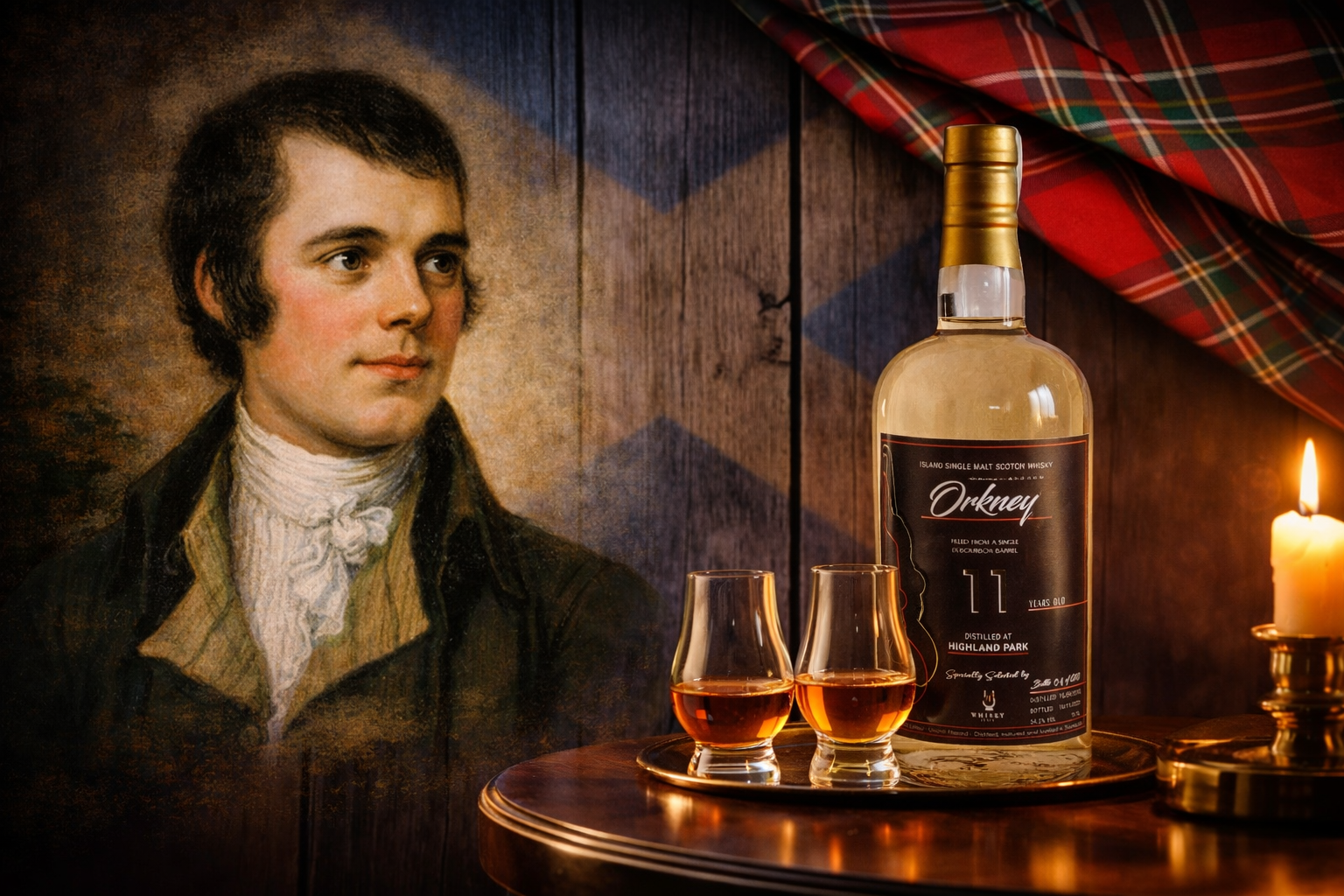
Who was Robert Burns?
Robert Burns (1759–1796) is regarded as the national poet of Scotland and one of the most influential figures in Scottish and British literature. Born in Alloway to a farming family, he gave a voice to the Scottish people, elevating the local language and culture to a recognised literary expression.
He wrote both in English and in Scots, deliberately choosing the language spoken by ordinary people. In his verses he addressed universal themes such as everyday life, love, friendship, social injustice, freedom and national pride, with a direct, ironic and deeply human style that brought him success even during his lifetime.
Burns thus became a true symbol of identity, embodying values of independence of thought, equality, conviviality and respect for tradition. He wrote his first poem at the age of 15 and, despite a short life that ended at just 37 due to heart disease, left an extraordinary legacy of more than 550 poems and songs. For his cultural contribution and influence, he is still considered one of the most beloved literary figures in the United Kingdom, with a reputation often described as second only to that of William Shakespeare.
The Burns Supper: the heart of the celebration
Today, Burns Night is expressed mainly through the traditional Burns Supper, a ritual dinner that brings together poetry, traditional music and gastronomy, with Scotch whisky playing the leading role in the toasts, as a symbol of conviviality, shared identity and Scottish pride.
There is no right or wrong way to organise a Burns Supper: the important thing is to create a pleasant and convivial occasion, both for the host and for the guests. That said, the evening often follows a recognisable ceremonial structure, which marks its key moments and reinforces its meaning.
- Beginning: Guests gather and the host opens the evening with a few words of welcome. Once seated at the table, the Selkirk Grace is recited, a short traditional Scottish blessing that expresses sobriety, gratitude and a concern for equality, central values of popular culture.
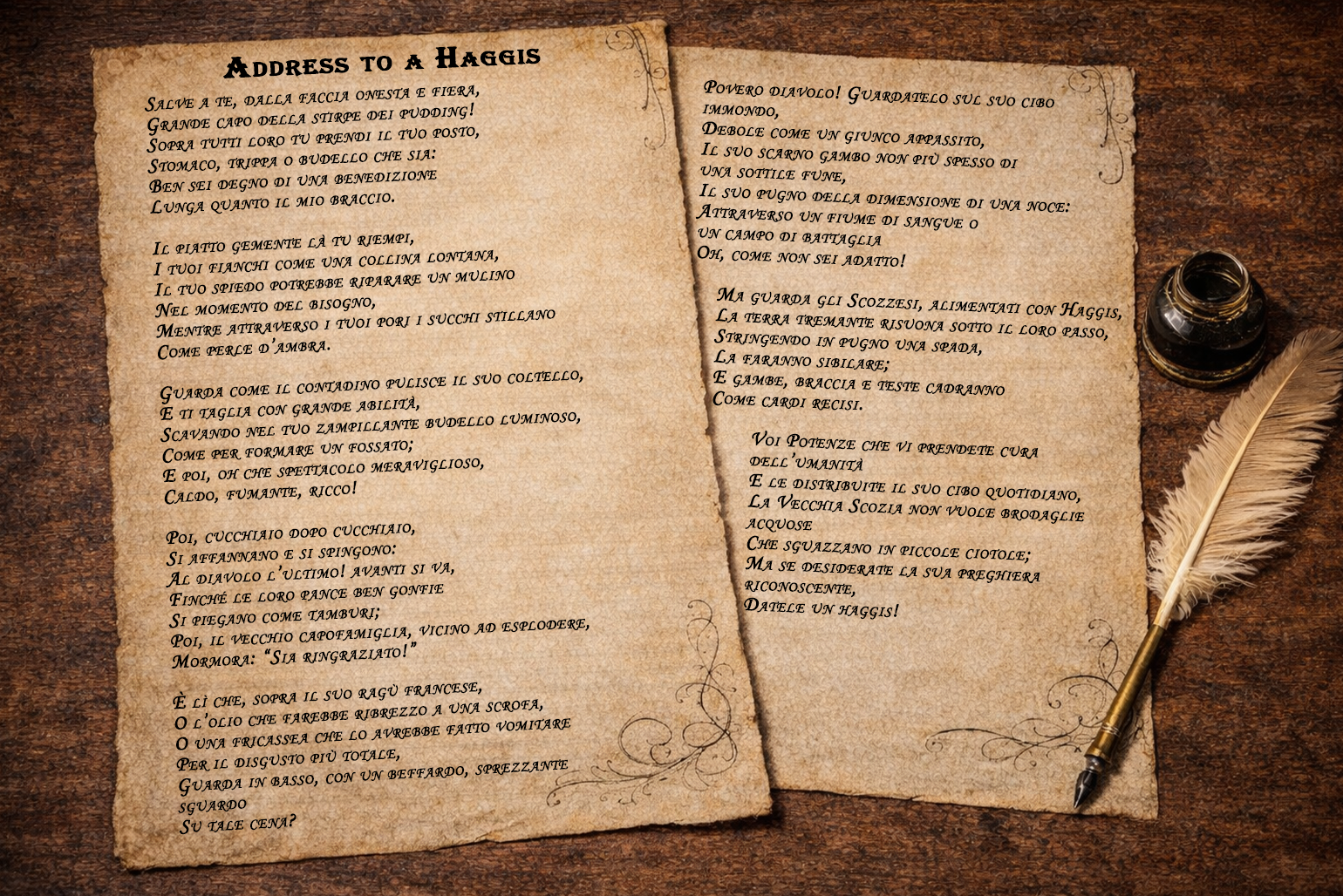
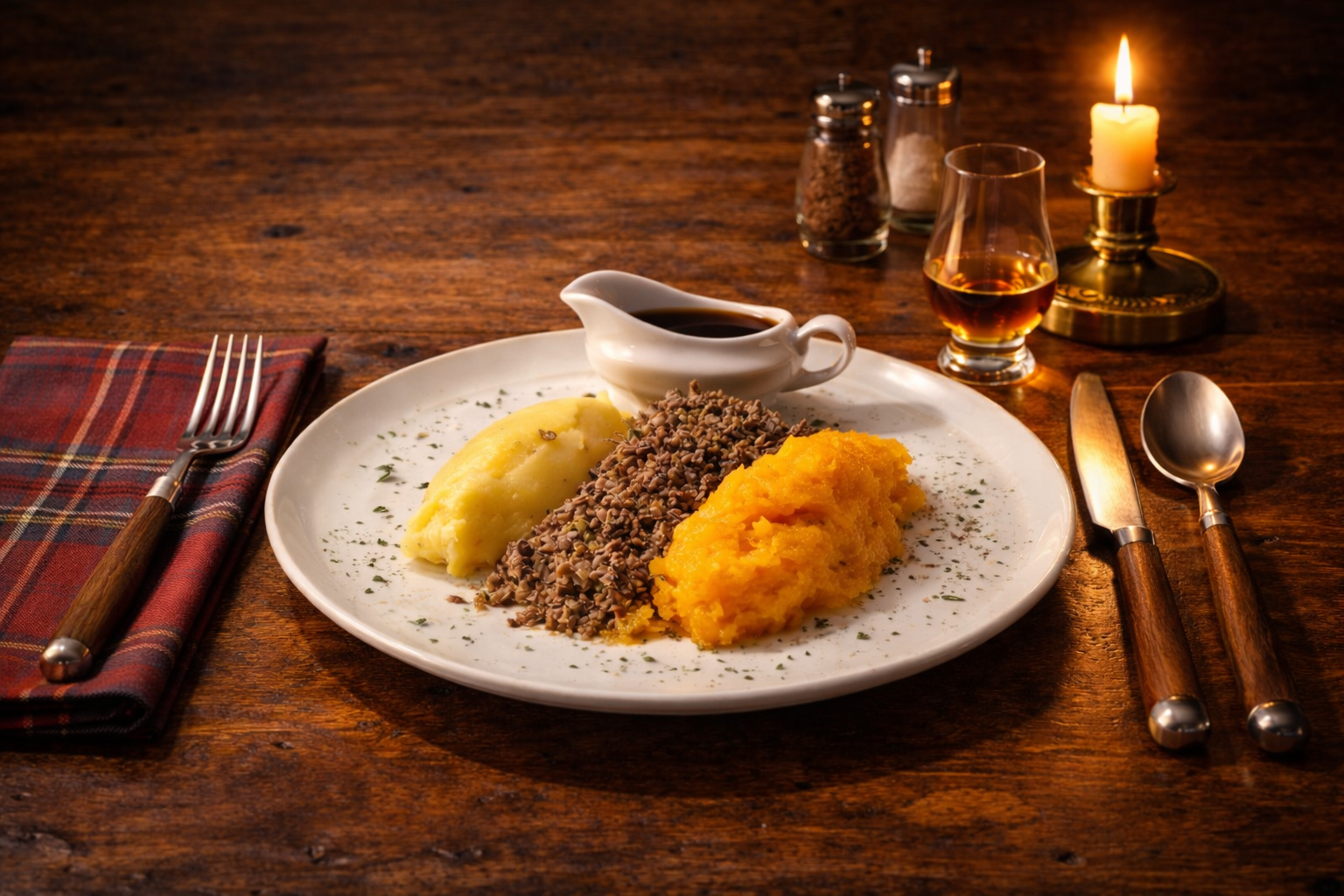
- The meal: The dinner begins with the starter. The haggis is then brought into the room accompanied by bagpipes, in one of the most solemn moments of the evening. The host recites the Address to a Haggis, a tribute to haggis as an emblem of Scottish cuisine and pride, followed by the traditional toast. The main course is then served and, to conclude, dessert.
- After dinner: Once the meal is over, a first Burns text is recited, followed by the Immortal Memory, the central speech of the evening dedicated to the life, work and cultural legacy of the poet. This is followed by the reading of a second selected text, then the Toast to the Lassies, an ironic and witty toast dedicated to women and their role in social, emotional and cultural life. This is answered by the Reply to the Toast to the Lassies, usually delivered by a woman, who cleverly and humorously overturns the themes of the previous toast. The formal part concludes with the recitation of a final Burns text.
- End of the evening: The host thanks the guests and the evening closes with the collective singing of Auld Lang Syne, an anthem to friendship, shared memory and the value of bonds over time. During the line “And there’s a hand, my trusty fere!” participants hold hands with the people next to them, symbolising unity, friendship and sharing.
The link with whisky
Burns lived and wrote in an era when whisky was an integral part of everyday life and popular culture. In his texts, the spirit appears as a symbol of sociability, conviviality and a free spirit. It is therefore no surprise that his name is inextricably linked to Burns Night, an occasion on which Scotch whisky accompanies the toasts in his honour and marks the most significant moments of the evening.
Although the available options are numerous, one rule remains fundamental: for Burns Night, only Scotch whisky is used, a criterion that immediately narrows the field and strengthens the bond with Scottish tradition. Another element to consider is the choice of styles: it is advisable to start with lighter, softer whiskies and then progress over the course of the evening to increasingly richer, more structured or peated expressions, accompanying the evolution of the meal and the toasts.