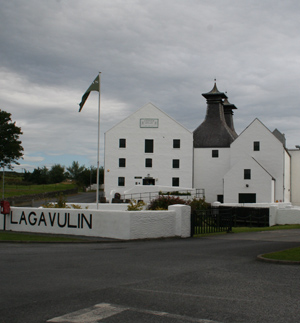
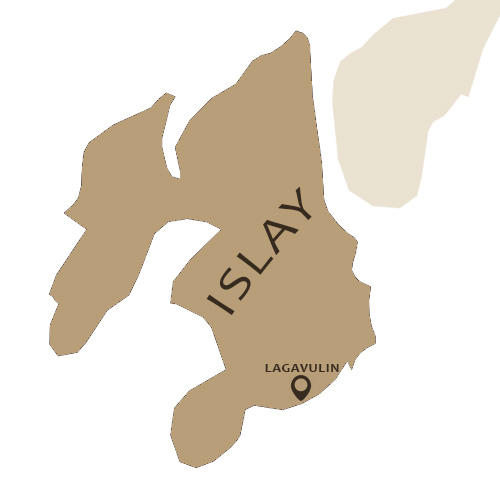
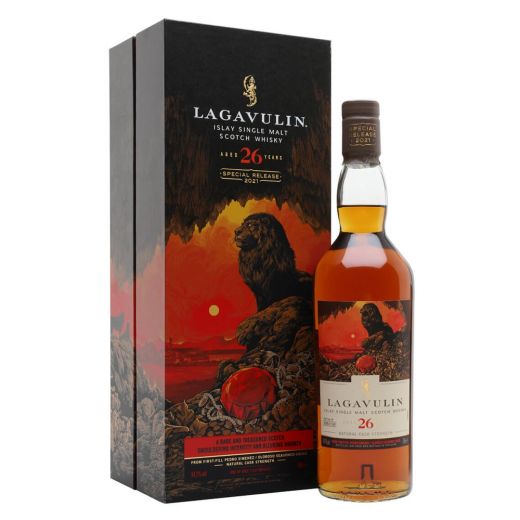
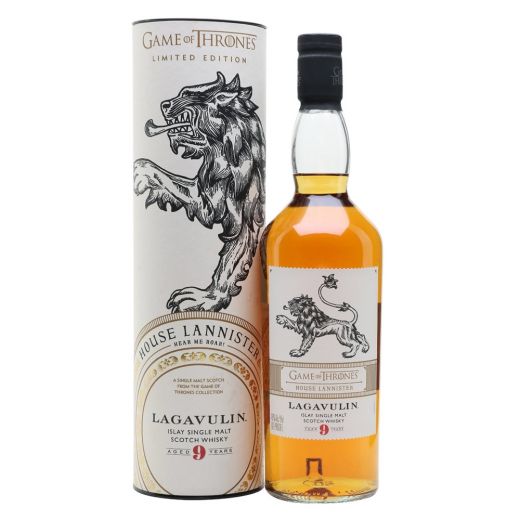
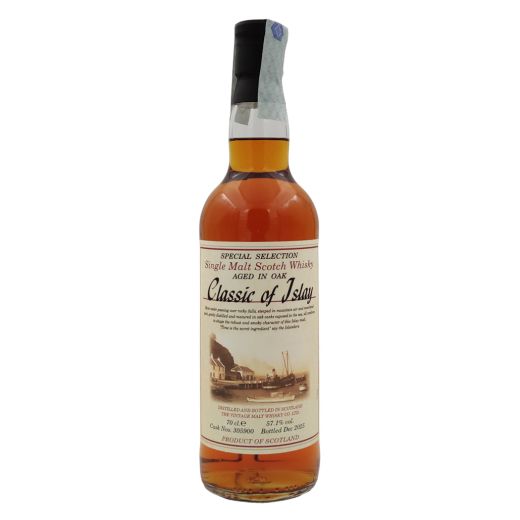
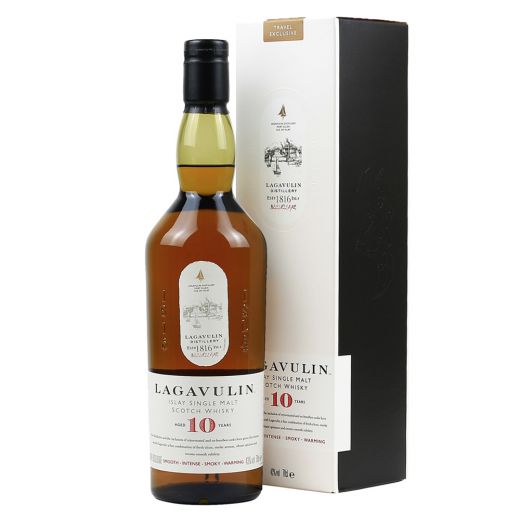
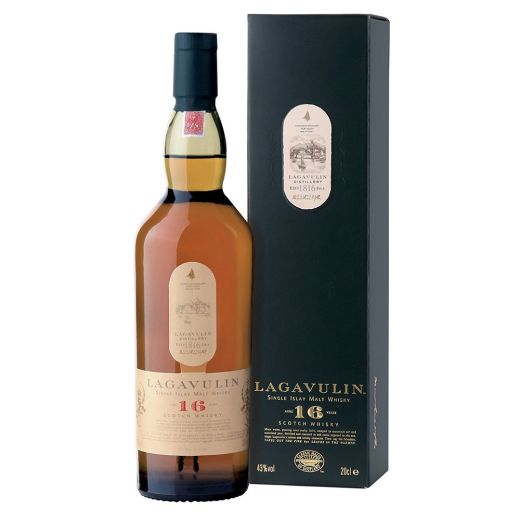
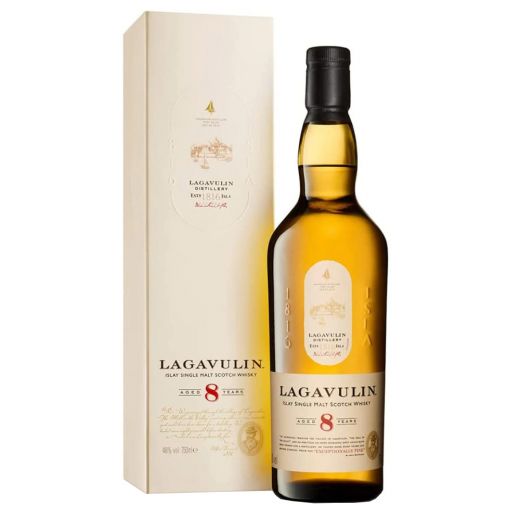
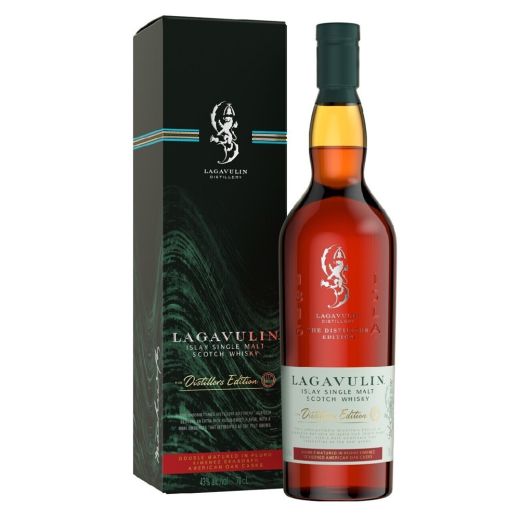
The south coast of Islay, near Port Ellen, is where the Lagavulin distillery stands, in a natural setting in which the sea is the true protagonist. Many centuries ago, numerous ships were wrecked in this area thanks to the treacherous submerged rocks that line the bay and that protected Dunyvaig Castle, seat of the Lord of the Isles, from the attacks of invaders.
It is said that the area near Dunyvaig Castle had been home to illicit distillers of spirits as far back as 1742, and in 1815 the local farmer and distiller John Johnston founded the area's first legal distillery, Kildalton; a year later Archibald Campbell founded a second distillery, which seems at first to have been called "Ardmore" but shortly afterwards took the name Lagavulin. In 1836 the distilleries were taken over by Alexander Graham, a Glasgow whisky merchant, who brought them together under one roof while keeping the name Lagavulin.
In 1867 the distillery passed into the hands of James Logan Mackie & Co., and on the death of its owner James Logan Mackie in 1889 it was his nephew Peter Mackie who took the reins. "Restless Peter", as he was nicknamed by his staff, launched the hugely famous White Horse blend a year later and, a few years after that, built the Malt Mill distillery. In truth, it seems Peter opened Malt Mill out of spite towards Laphroaig, which had changed the sales policy for its product: Peter Mackie was also Laphroaig's sales agent, and in 1907 Laphroaig decided to start selling its own whisky itself. Mackie went so far as to build a dam blocking the distillery's water supply, and the quarrel between neighbours soon moved to court, where a ruling ordered Peter Mackie to restore the original situation. In 1908 Mackie, who knew Laphroaig's equipment very well, built Malt Mill next to Lagavulin and commissioned two stills that were exact copies of those used by Laphroaig; the aim was to produce a malt whisky identical to that made by his rival. It never worked as Peter had expected, however, and Malt Mill was closed in 1960. Despite this, Sir Peter Mackie (he was made a baronet in 1920) worked hard to ensure that Lagavulin continued to be made with the utmost attention to detail.
In 1974 the malting floors were abandoned and, since then, the malted barley has come from the nearby Port Ellen maltings. Today four stills are in use at the distillery, two of them pear-shaped in the style inherited from Malt Mill, and under the procedure still followed today Lagavulin is given the slowest distillation of all the Islay single malts (around five hours for the first distillation and over nine hours for the second). It seems to be this way of working that helps give Lagavulin its characteristic roundness and its soft, warm notes, so rightly appreciated by enthusiasts.
Did you know? The barley used to distil Lagavulin is malted at nearby Port Ellen and its fermentation is a slow process (it takes between 55 and 75 hours to bring out its flavour fully). Its character is unmistakably marked by peat notes, and this is due in part to the use of water from the Solum Lochs, which runs down towards the distillery through peat-rich ground before being channelled into the works.
 en
en
 WI IT
WI IT