 en
en
 WI IT
WI IT
The Return of Scotland’s Ghost Distilleries

The Return of Scotland’s Ghost Distilleries
From Brora to Port Ellen, by way of Rosebank: the great lost names of Scotch are coming back to life. A story of industrial archaeology, myth and new ambitions.
There are places, in Scotland, where time does not seem to have stopped: it seems to have placed itself on hold. Silent warehouses battered by the northern wind, copper stills standing motionless for decades, courtyards where for years nothing has been heard but the sound of the rain. And yet, in the world of Scotch, it is precisely from these suspended places that one of the most fascinating stories of recent years is emerging: the return of the ghost distilleries.
For a long time they were called just that, the lost distilleries: legendary names shut down during the industry’s crises, then surviving only at auctions, in collectors’ catalogues and in the tales of enthusiasts. Distilleries that became almost greater in death than in life. Today, however, something is changing. Some of them are no longer merely relics of the myth: they are returning to distilling.
This is not a simple nostalgic fashion. It is something more sophisticated and, ultimately, very Scottish: the ability to transform memory, landscape and identity into a new productive season. Because reopening a historic distillery does not mean merely setting the plant in motion again. It means trying to bring back to life a character, an aura, a legacy.
Port Ellen: the sacred ghost of Islay
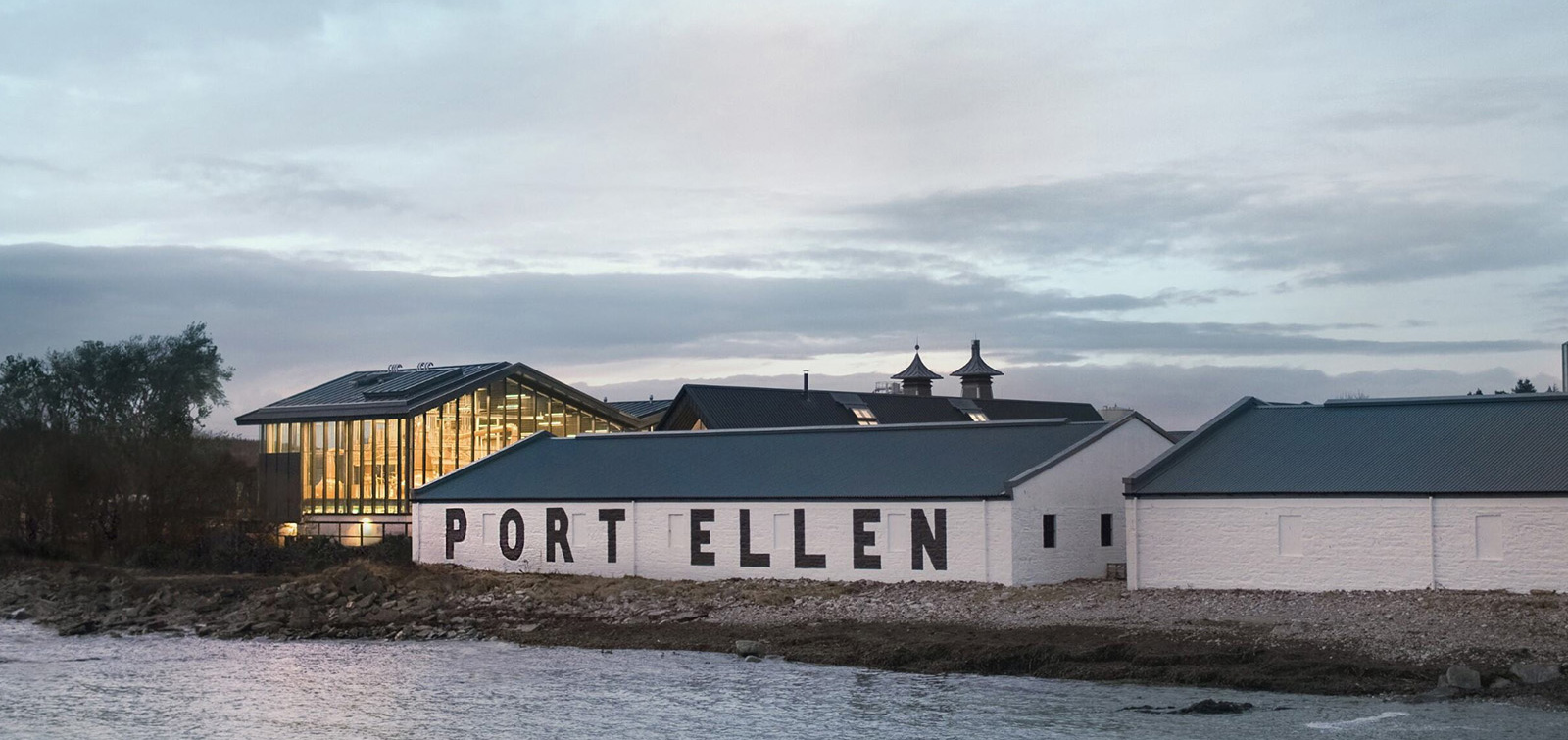
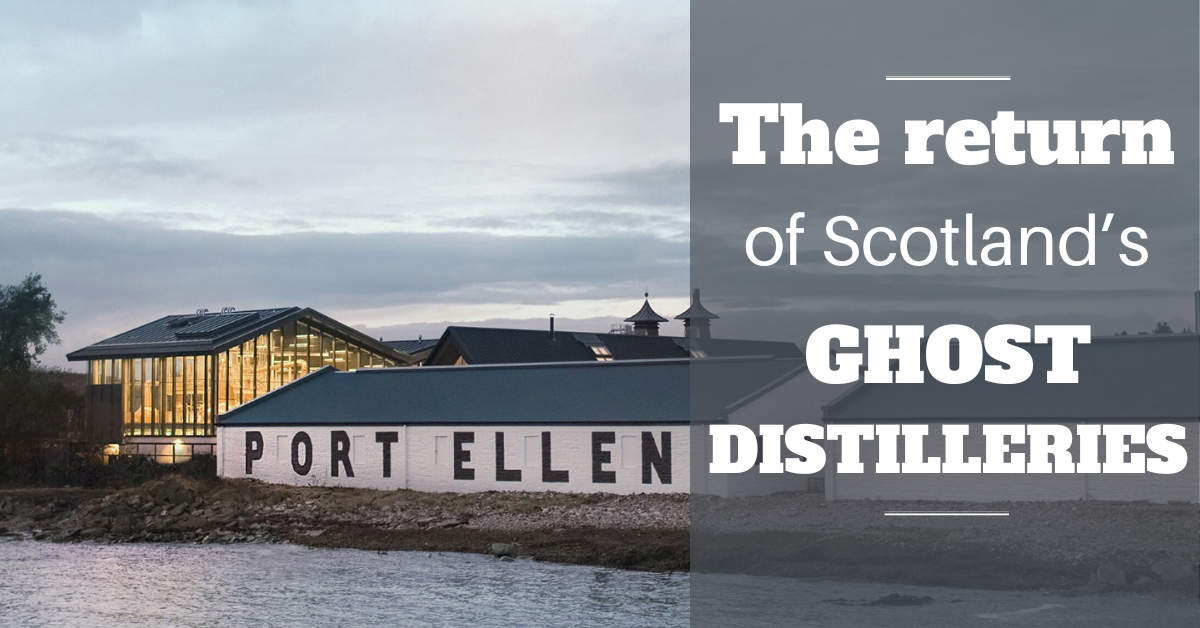
Port Ellen is the absolute legend of Islay, and for many years it was the ultimate obsession for whisky enthusiasts worldwide—people willing to go to extreme lengths just to secure one of the bottles released by Diageo or independent bottlers. Few names in whisky evoke the same level of fascination.
Closed in 1983, with its remaining stock growing ever rarer and prices climbing to astronomical levels, Port Ellen was never just a lost distillery. It became the very symbol of what makes Scotch whisky irresistible: the perfect convergence of scarcity, place, and myth.
Its official return on 19 March 2024 was awaited almost like a historic event—and it truly felt that way. Yet the new Port Ellen was never intended as a simple historical reconstruction. Its relaunch speaks the language of today: bold design, experimentation, hospitality, and a deep exploration of what defines Islay whisky character.
Port Ellen didn’t come back merely to comfort the nostalgics. It returned to prove that even a distillery elevated to the pantheon of “ghosts” can still occupy a vital place in contemporary whisky culture. On Islay, after all, the line between landscape and spirituality has always been thin. And Port Ellen continues to feel exactly like that: a place where whisky stops being just a drink and becomes ritual, wind, salt, and waiting.
Brora: the rebirth of the Highlands
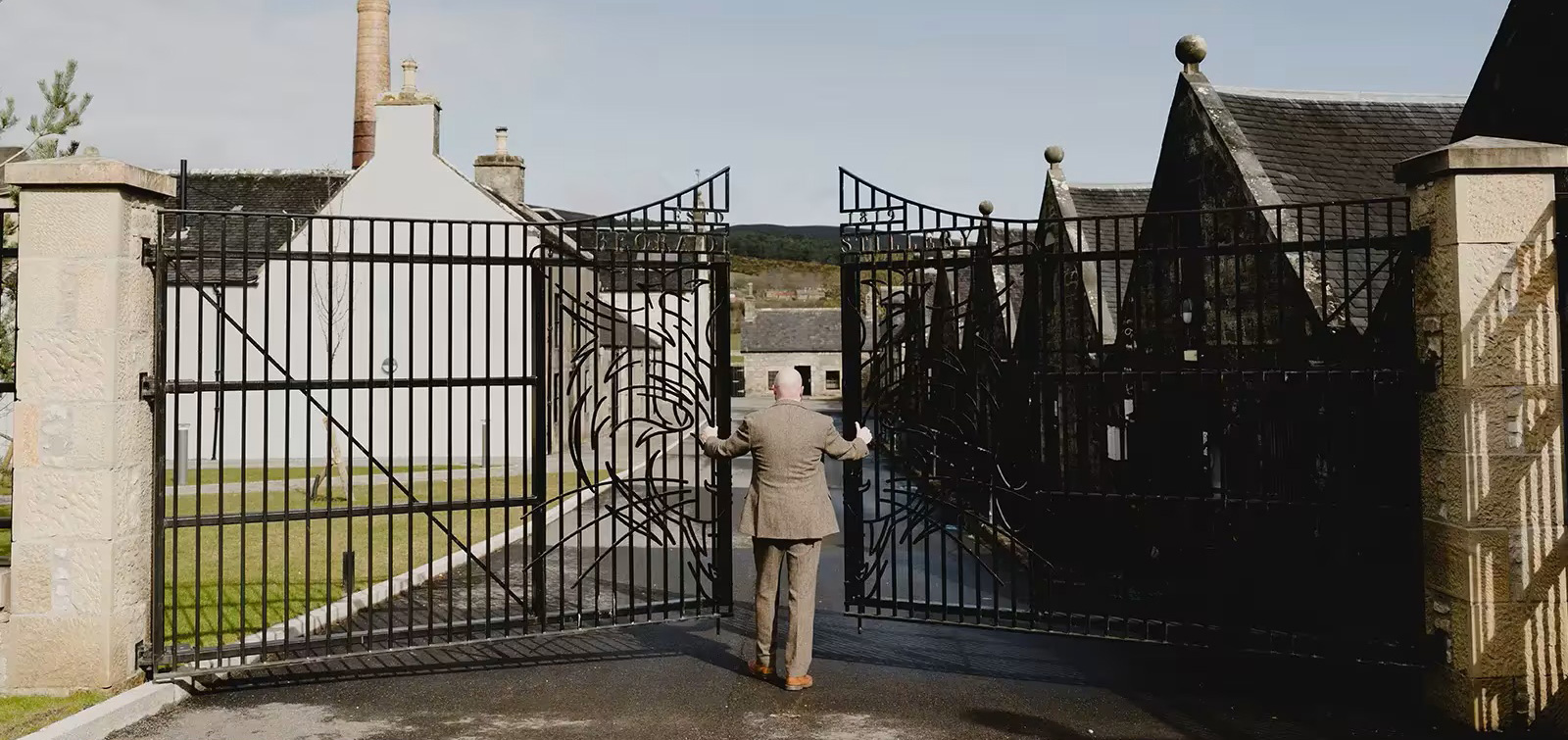
Among all the great returns, Brora is perhaps the one that most resembles a full-fledged resurrection. Closed in 1983, in the depths of a brutal phase for Scotch whisky, Brora became over time one of the absolute symbols of the “lost malt”: extremely rare bottles, dizzying prices, a legendary aromatic profile, suspended between elegance, wax, salt and an austere, exquisitely fine peat.
The official reopening, on 19 May 2021, had the flavour of disbelief. For years Brora seemed to belong more to the realm of desire than to that of reality. And yet there it was again, in the northern Highlands, back in operation not as a theme park of memory, but as a true distillery.
Its strength, today, lies in a delicate balance: not to betray the myth, but neither to remain its prisoner. Brora has not returned to imitate itself like a faded copy. It has returned to prove that a legend can still have a present.
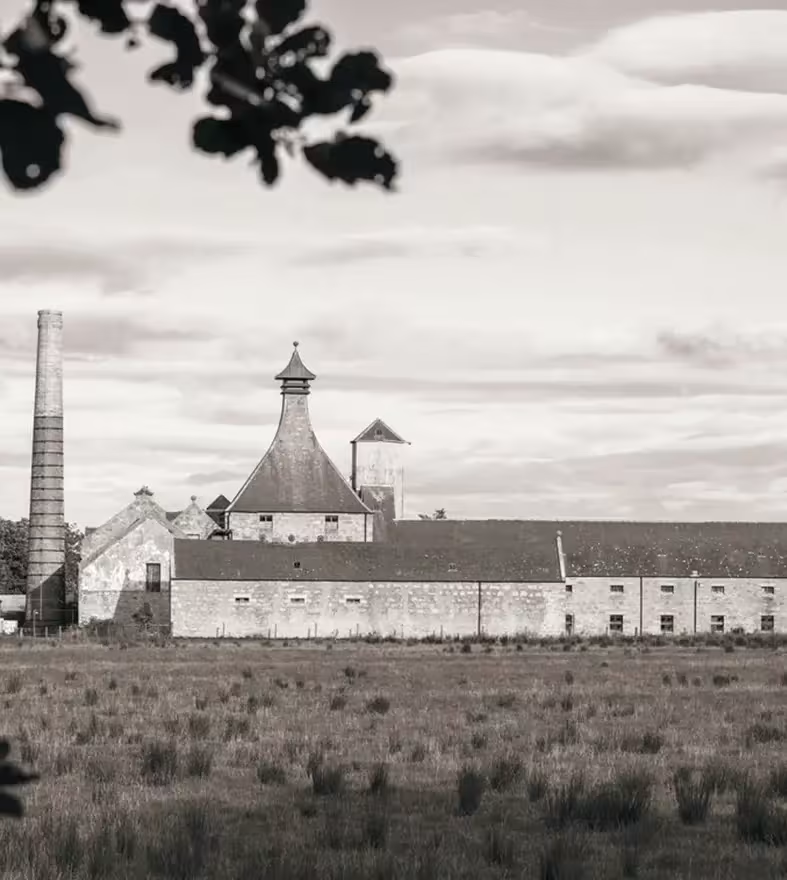
Click image for full view
Rosebank: the return of lost elegance
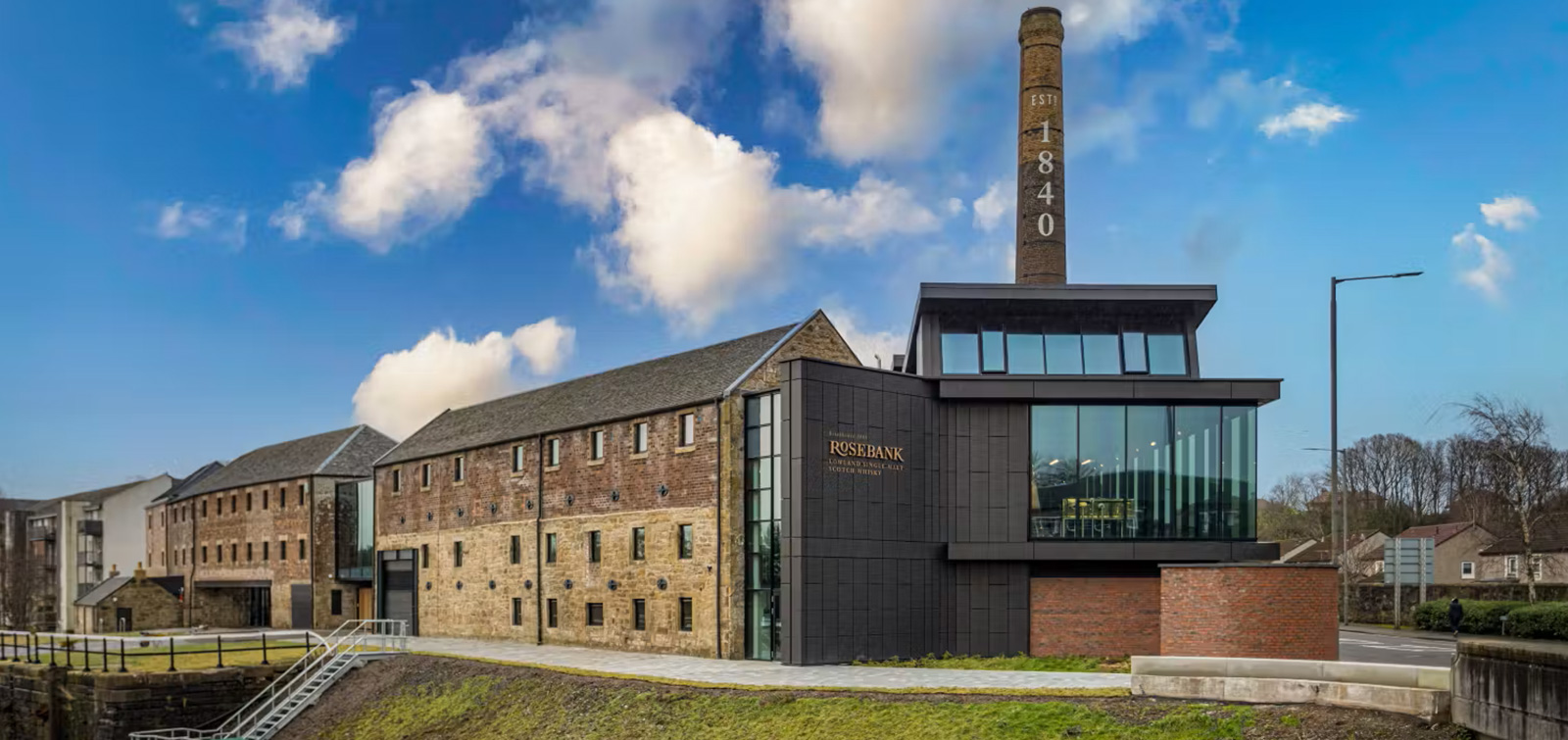
Then there is Rosebank, which tells of yet another Scotland. Less rugged, less maritime, less peated. A Scotland of canals, industrial gardens, stylistic precision, white flowers and refined distillation. Among the great losses of whisky, Rosebank has always been a special wound: the symbol of a Lowland classicism that seemed destined to remain confined to memories and vintage bottles.
Its rebirth came in two stages: production of new spirit resumed on 5 June 2023, while the distillery reopened to the public in June 2024, under the guidance of Ian Macleod Distillers. A long-awaited return, and not only for the value of the name.
In an era when the narrative of whisky often tends towards intensity, peat, muscle and power, Rosebank places another idea of greatness back at the centre: that of finesse. Its reopening counts also as a cultural gesture. In a landscape where everyone is chasing volume, Rosebank recalls the power of subtraction.
Dallas Dhu: the next chapter
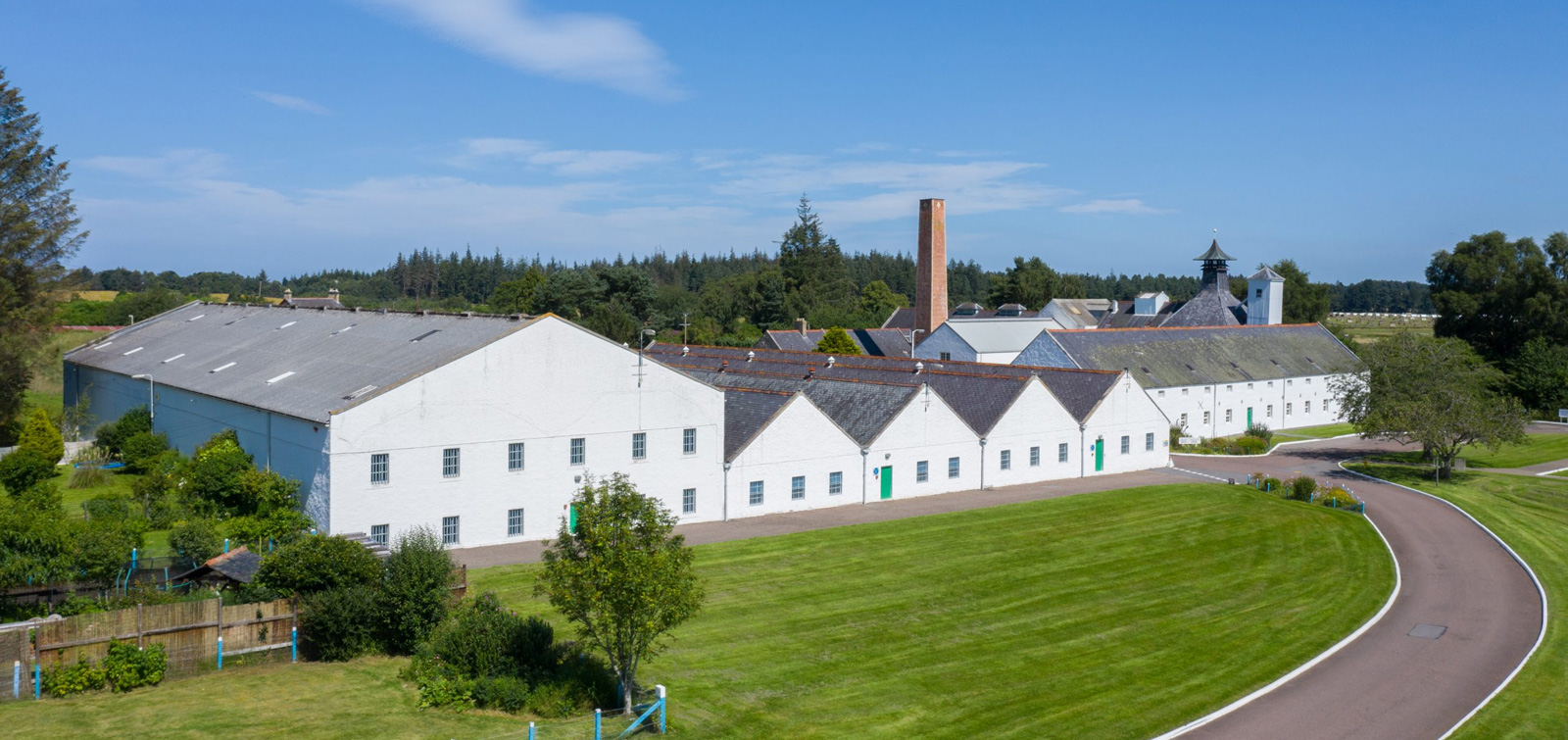
And then there are the places that still seem to sit on the boundary between past and future. Dallas Dhu is one of these. For years it was above all a precious testament to industrial archaeology, a historic site able to recount how a whisky distillery worked in another era. In July 2024, however, Historic Environment Scotland announced the reactivation of the site as a true working distillery, through a programme entrusted to Aceo Distillers.
Dallas Dhu has something the others no longer have in quite the same way: the charm of the time machine. If its rebirth reaches full completion, it will not be merely a reopening. It will be almost a cultural experiment: to see whether a place safeguarded as historic heritage can return to having a real productive role as well, without losing its own soul. It is the name to follow most closely in the years to come.
Why now?
The simplest answer is the market. In the world of contemporary luxury, few assets are worth as much as a name already consecrated by time. A new distillery has to make its way; a legendary distillery starts out with a narrative capital that no branding strategy can truly buy.
But it would be reductive to stop there. Today whisky sells not only flavour: it sells places, experiences, stories, pilgrimages. And in this the reopened distilleries hold an almost unbeatable advantage. They do not have to invent a myth: they already have one. So Brora, Port Ellen, Rosebank — and perhaps soon Dallas Dhu — are not simply plants returning to operation. They are proof that Scotch has understood how to transform its own past into a living, contemporary, desirable substance.
The allure of second lives
There is something profoundly moving in the second lives of Scottish distilleries. Perhaps because whisky, more than any other spirit, has always had to do with time: the time that passes in the cask, the time that smooths the edges, the time that builds reputations and legends.
This is why the return of the closed distilleries is not merely industrial news. It is a story of identity, of landscapes, of memory and of stubbornness. It is Scotland speaking again through its most celebrated silences.
The ghost distilleries, after all, were not dead. They were only waiting for the right moment to return.