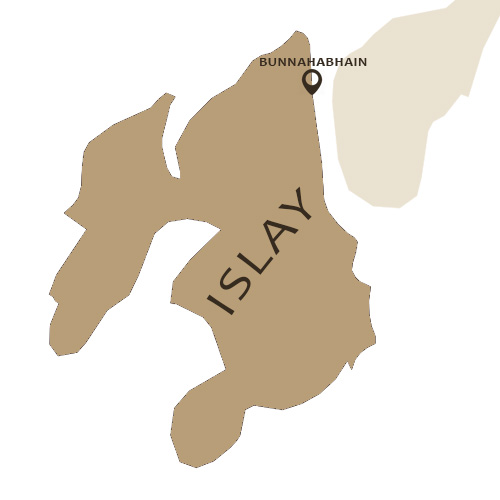
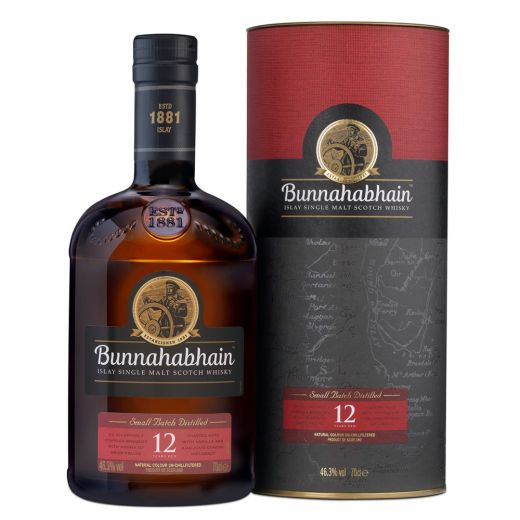
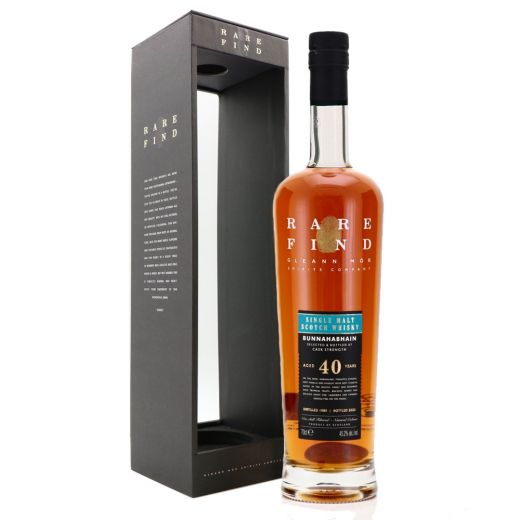
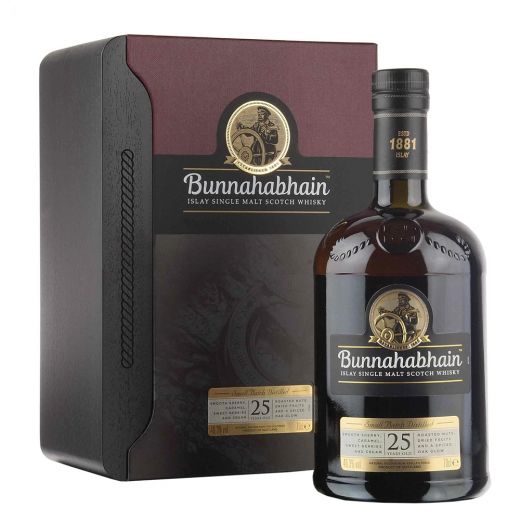
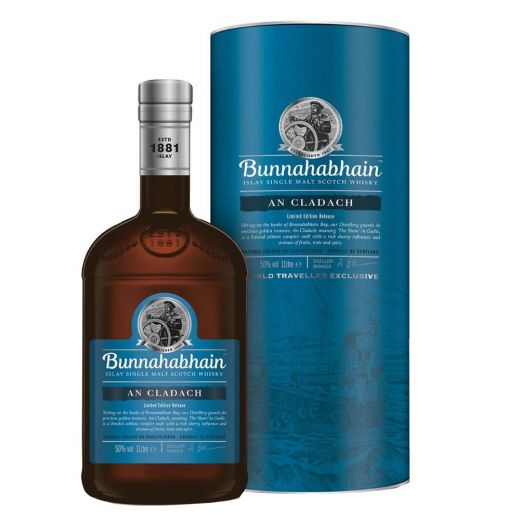
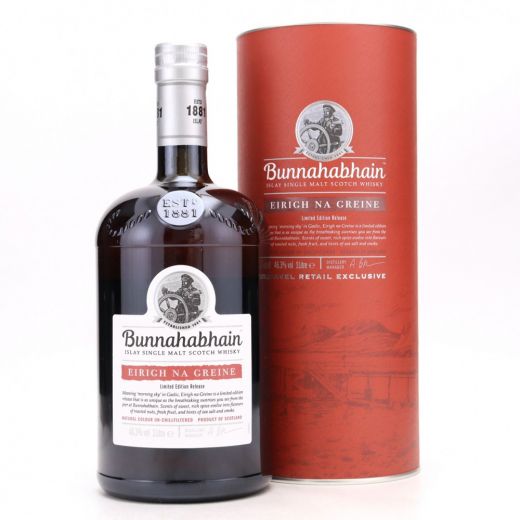
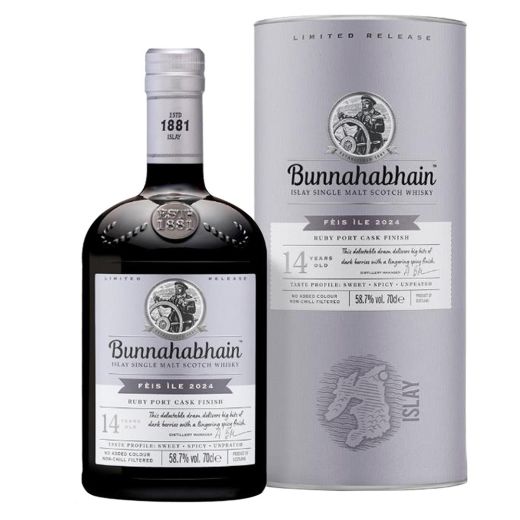
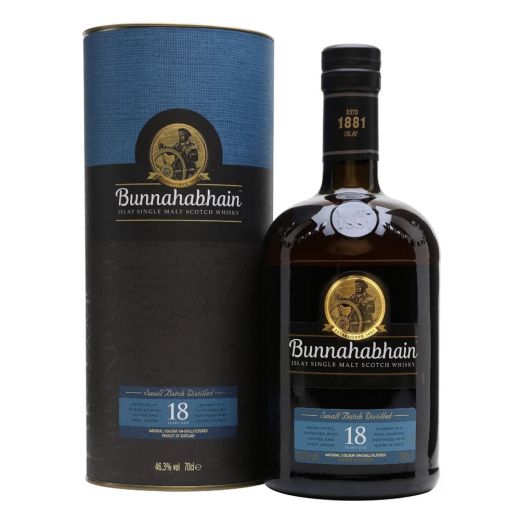
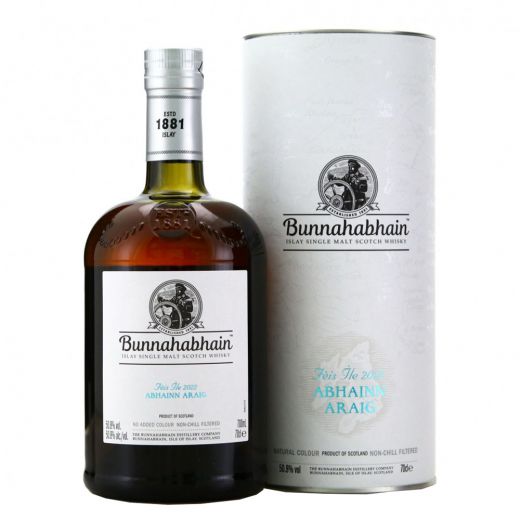
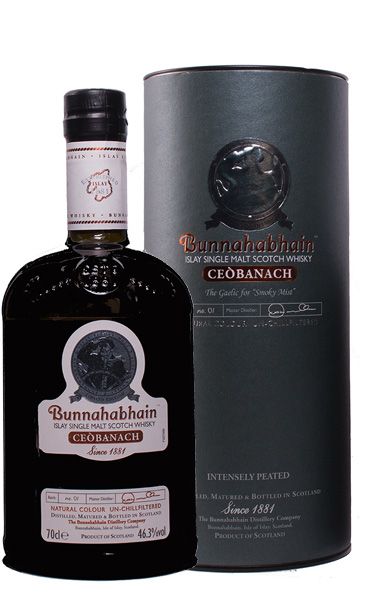
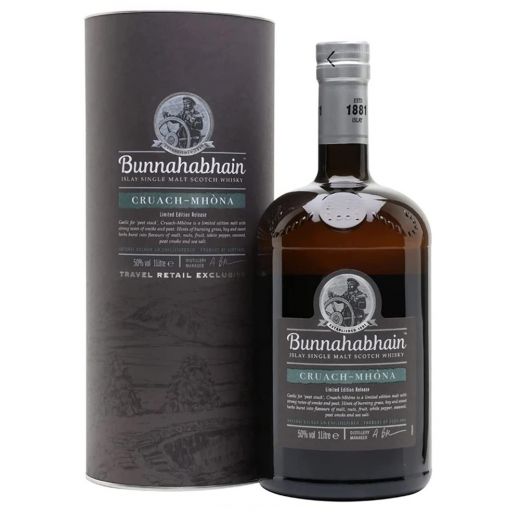
Bunnahabhain is located on the north-eastern side of the enchanting island of Islay, a little to the north of the Caol Ila distillery. Founded in 1881 by a partnership known as Islay Distillery Co Ltd, in the beginning the site was nothing more than a stony beach, but before long the "beach" had been given not only the distillery but also a road, a pier, a cottage for the workers and, finally, a schoolroom. The undertaking cost a full £30,000, yet by its second year of operation it was making a profit of £10,000.
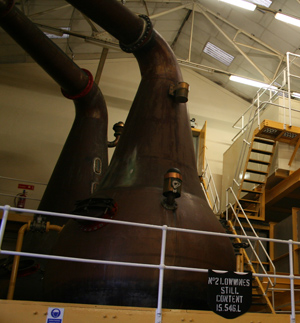
In 1963, following a boom in market demand, the distillery expanded, taking its stills from 2 to 4. Seven years later, in 1970, a 12 year old single malt was launched (until then the distillery's entire output had gone into blends). In 1999 the distillery was acquired by the Edrington Group, which — to contain costs, and probably with very little faith in this particular whisky — put Bunnahabhain on limited production. In 2003 Bunnahabhain was sold to Burn Stewart Distillers plc for around 12 million euros (the deal also included the popular blend Black Bottle). Today the distillery has an annual output of 2,500,000 litres, and a full 21,000 casks are used for the maturation and bottling of Bunnahabhain single malt and Black Bottle, while the remaining spirit goes into the Cutty Sark and The Famous Grouse blends.
Bunnahabhain is the lightest of the Islay malts because it does not use peated barley; what is more, the water that comes from the Margadale Spring on Islay is drawn off before it passes through the peat.
Did you know? Until the 1960s, as with almost all the distilleries on Islay, Bunnahabhain produced only peated whisky. At the end of the Sixties the distillery manager decided to create an unpeated malt.
More recently the distillery has brought a peated whisky (around 45 ppm) back into its range: the whisky is called Toiteach, which in Scottish Gaelic means smoky.
 en
en
 WI IT
WI IT