 en
en
 WI IT
WI IT
Mortlach: the Beast of Dufftown and the 2,81 secret
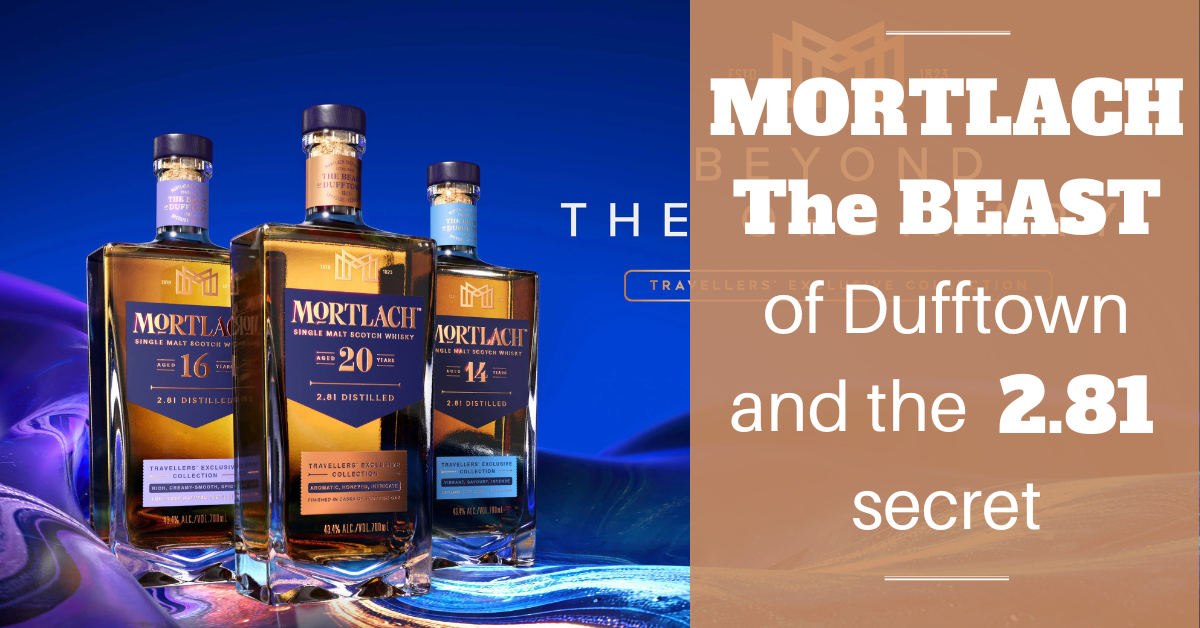

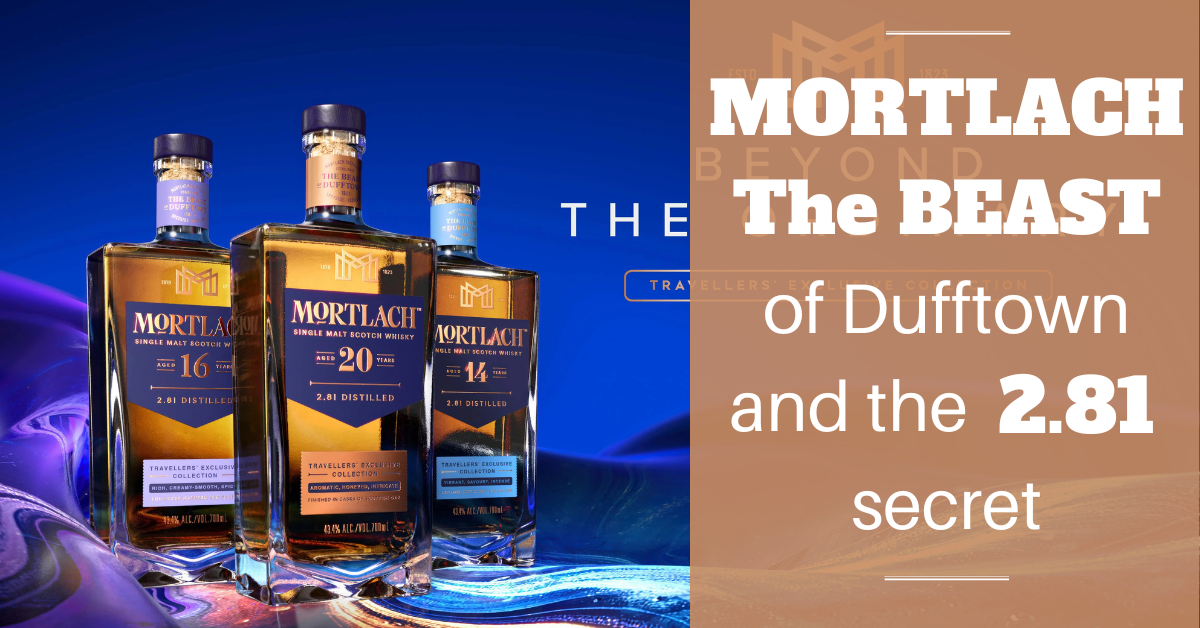
Mortlach: the Beast of Dufftown and the 2,81 secret
Most Scottish single malts are distilled twice; a few, such as Auchentoshan and Hazelburn, use triple distillation instead. Mortlach follows a completely different path: its spirit is officially described as being distilled 2.81 times.
An apparently impossible number, which does not indicate that every single drop passes through 2.81 stills, but represents the weighted average with which Mortlach describes the number of distillations undergone by the different streams that make up its new make. It is the synthesis of one of the most complex and singular distillation systems in all of Scotland, responsible for the robust, full-bodied style that has made Mortlach famous among enthusiasts around the world.
Its unmistakable sulphurous, meaty and spicy profile has helped make it famous as “The Beast of Dufftown”.
From the Origins to the 2.81 System
Mortlach was founded in 1823, in the aftermath of the Excise Act, on the site of a former illicit distillery. It was the first legally licensed distillery in Dufftown, a town destined to become one of the main production centres of Speyside.
The turning point came in 1853, when the engineer George Cowie joined the company. After his death, his son Alexander left his career as a doctor in Hong Kong and returned to Scotland to take over the distillery. In 1897, together with the famous architect Charles Doig, he expanded Mortlach, increasing the number of stills from three to six. His scientific training and analytical inclination contributed to the development of the intricate 2.81 distillation system, known as “The Way” and still used today.
To understand how it works, one must start from Mortlach's still room, an environment unique in the Scottish landscape. Inside there are six stills arranged in a row, all different in shape and size: three wash stills and three spirit stills.
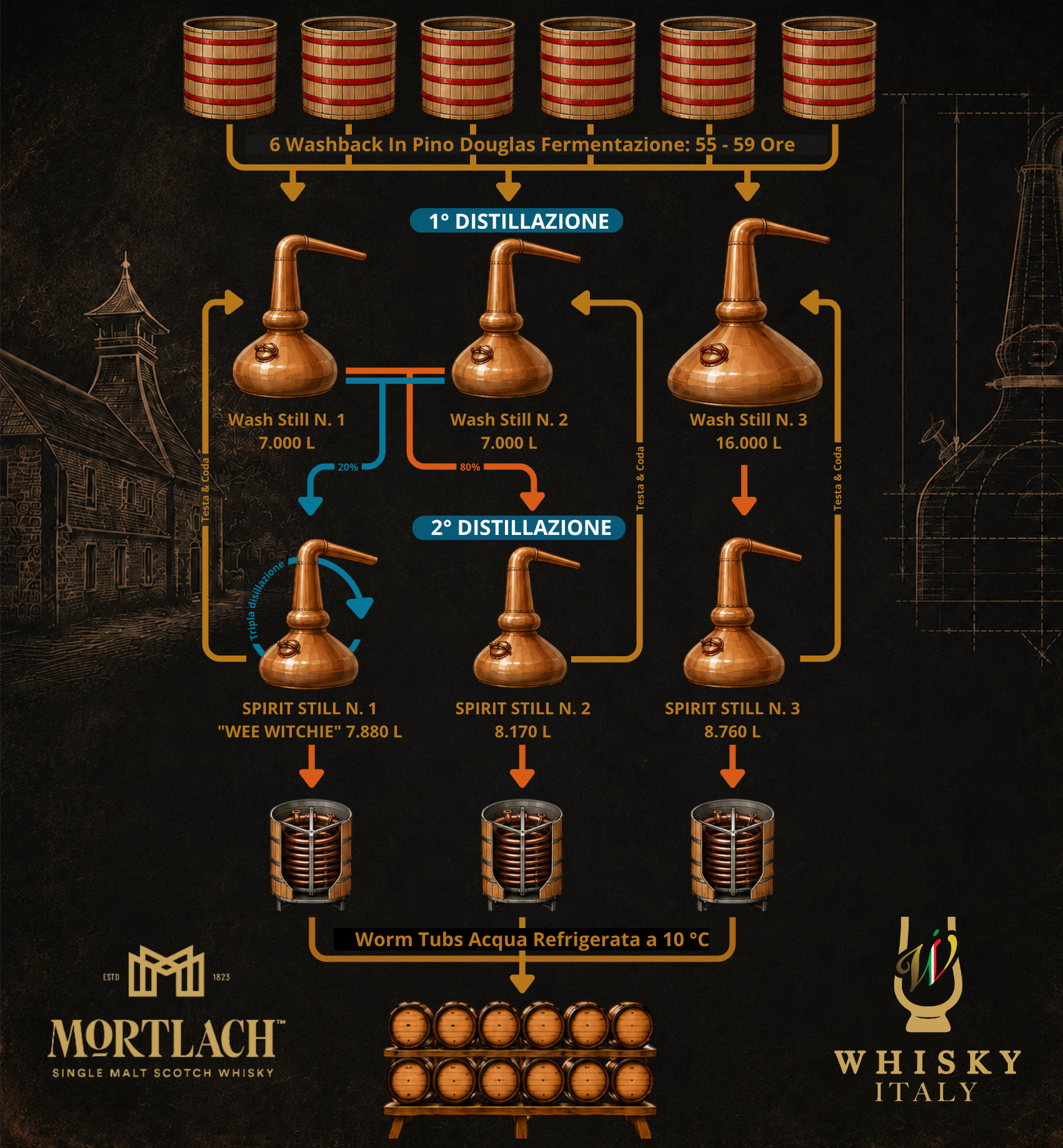
Wash stills number 1 and number 2 are the smallest, with a nominal capacity of about 7,500 litres each, while wash still number 3 reaches 15,000 litres. The spirit stills also have different volumes: number 1, the smallest, has a nominal capacity of 7,880 litres; number 2 holds 8,170 litres; number 3, finally, reaches 8,760 litres.
What makes the system even more particular is the fact that these stills do not work as three fixed, independent pairs: the different streams are separated, transferred and redistilled following different paths.
The First Path: Traditional Double Distillation
Wash still number 3 works together with spirit still number 3, following a substantially conventional process.
The wash is distilled a first time in the wash still. The low wines are transferred to spirit still number 3, where the second distillation takes place. The heart is destined for the new make, while heads and tails are separated and reintroduced into subsequent cycles.
This first stream constitutes one of the components of Mortlach's future new make and represents the most linear part of the entire system.
The Second Path: The Lighter Fraction
Wash stills no. 1 and no. 2, on the other hand, follow a more complex path.
They work together, a configuration that is already unusual in itself. The distillate produced is divided into two fractions. The first, corresponding to about 80% of the low wines, is richer in alcohol and volatile compounds and is sent to spirit still number 2. Here it undergoes a second distillation: the heart flows into the new make, while heads and tails are separated and recycled in subsequent cycles.
This component is therefore also substantially subjected to a double distillation, but it presents different characteristics from the one produced by pair number 3, due to the division of the distillate into two cuts.
The Third Path: The Wee Witchie
The remaining 20%, coming from wash stills number 1 and number 2, consists of the weakest and heaviest fraction of the low wines. It contains a greater quantity of water and less volatile compounds, including some sulphur elements.
This part is sent to spirit still number 1, the smallest in the plant, known as “The Wee Witchie”.
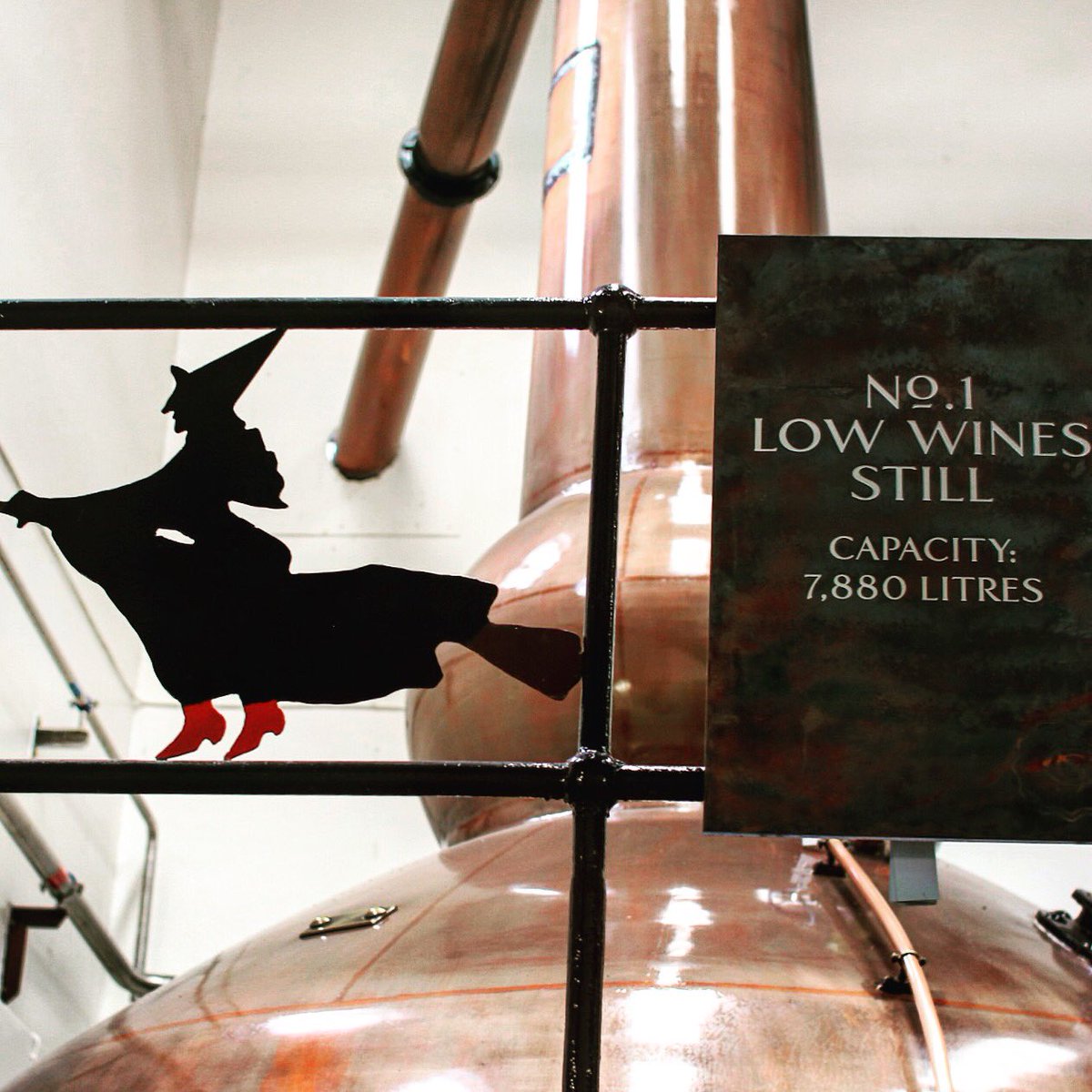
The heaviest fraction is subjected to a triple distillation. During the first two runs no heart destined for maturation is taken: the distillate is collected and put back into circulation to be distilled again. These passages are generally referred to as “dud runs” or empty distillations.
Only in the final run are the cuts made and the heart that will enter the final composition selected. This stream is normally described as triple-distilled in the Wee Witchie. However, considering also the previous passage in the wash still, part of the liquid passes through a total of four distillation cycles.
At the end of the process, Mortlach's new make is born from the union of three streams:
- the distillate produced by the pair formed by wash still number 3 and spirit still number 3;
- the heart obtained from the initial fraction of wash stills number 1 and number 2, redistilled in spirit still number 2;
- the heart obtained from the final, heavier fraction, subjected to the three runs in the Wee Witchie.
Is It All About Distillation?
Distillation is certainly decisive in defining Mortlach's style, but it is not enough on its own to explain the meaty, sulphurous and structured character of its spirit. An important contribution already comes from fermentation, generally carried out for a period of between 55 and 59 hours.
During this phase numerous congeners and aromatic precursors develop which, through the subsequent processing in the stills, will contribute to the formation of the distillery's typical profile. Mortlach also uses relatively clear worts, limiting the presence of solid residues that could excessively accentuate the malty, spicy and nutty components.
The operation of the stills is also oriented in the same direction. The distillations proceed at a rather sustained pace, reducing reflux and the time during which the vapours come into contact with the copper surfaces. Between one cycle and the next, moreover, the so-called air rests are not carried out: the stills are not left open and ventilated, thus limiting the regeneration of the reactive copper surface.
Completing the process are the traditional worm tubs, fed with particularly cold water, around 10 °C. Inside these large vats, the vapours pass through long copper coils and condense rapidly. Compared to modern shell-and-tube condensers, contact with the metal is less intense and the action of the copper is therefore more limited.
The entire process creates a deliberately copper-poor environment, in which a greater quantity of sulphur and heavy compounds manages to survive in the spirit. It is precisely these elements that contribute to the oily, robust structure and the characteristic meaty notes of Mortlach's new make.
The result is a production method conceived at the end of the nineteenth century and remained substantially faithful to the same philosophy: not to completely eliminate the heavier components, but to control them and use them to build depth, texture and a remarkable capacity for evolution during maturation.
It is from this complex balance that the Beast of Dufftown is born.
Want to discover the Beast of Dufftown?
Explore our selection of Mortlach bottlings available on Whisky Italy.